The horror genre is one which some find difficult to textually define, due to its somewhat distinctive detachment from the patriarchal, conventional male-streamed views and portrayals featured in other genres. Because of this, it is an interesting topic to debate when comparing genres in regards to the gender representation portrayed in different films.
I am going to use three films of the 'horror' genre (some arguably categorised as 'thrillers') as examples and case studies to question and prove some points that show different views of gender representation in these movies.
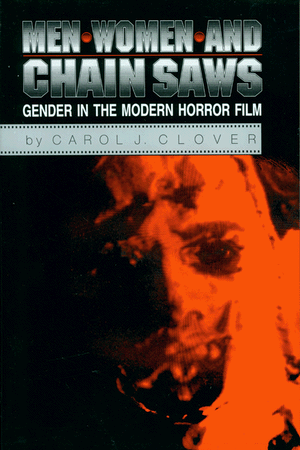 Many media products for many years come from the point of view of an 'appraising hetrosexual male's perspective. This is mostly relevant when this point of view is viewing women as objects, usually sexual objects. It is argued, mainly by a theorist called Laura Mulvey, that much commercial cinema puts the spectator into the position of a straight man by adapting technical camera strategies which present women as objects to be looked at and men as subjects who do the looking. This view is backed up a lot when watching certain movies, as much of the camera shots are over-the-shoulder shots or point of view shots from a man's perspective, usually viewing a woman who is displayed to the viewer in an establishing long shot, as objects are. This puts women who are hetrosexual themselves in a very questionable position, whereas it relates to straight males and homosexual females. Although this questions wether this is sexist towards women, not to mention objectifying and unfair, some theorists argue that the horror genre fights against this. The theorist and author Carol J. Clover explores how the horror genre almost always typecasts the main protagonist as female - the women become the victims and suffer at the hands of a villan, but eventually become the 'final girl', the only one to escape and fight back against the evil, changing the stereotypes from a passive, emotional, weak woman to a strong, confident fighter. She also talks about how the 'final girl' is very easy to relate to if the audience consist of young, adolescant males, due to how they grow up and if they are bullied or teased during school, which is highly likely of boys this age.
  Halloween was one of the first ever 'slasher' horrors in its genre. This was a typical horror involving a psychopathic male killer praying on others and murdering them, the only difference was that a majority of them were young, sexually active females who would be slaughtered whilst continueing in some petty sexual act, stereotypically suited to their ages and lifestyles. The main protagonist, however, offers another view on femininity, being completely non-sexual through out and differing from her friends as an androgynous, quiet young woman. Her name 'Laurie' is a same sex name, her dress sense is that of a conservative, masculine manner and she is in no way sexualised through out the film, whereas her friends are arguably sexually objectified previous to their deaths because of their lack of clothing and/or sexual act participation during that time. This offers a new perspective on the regular 'male-gaze' ideology of all women being nothing but objects, as it is the woman in this film who eventually beats the killer and lives. However it still backs up feminine stereotypes as all women act familial in one way or another to siblings and family, and a majority of them are domesticated around the house.
The Shining once again has pros and cons in regards to gender representation. Although unmentioned previously, in Halloween all the men featured, excluding the actual killer Mike Myers, are all authoritave, 'in-charge' rolls with the females being mainly passive to this. In The Shining, this is no different, as the husband Jack moves his wife and son to a secluded hotel in the middle of no where, and without question his wife complies, and carries on withstanding his mood swings and aggressive behaviour as he becomes more and more distant. She helps out around the hotel, doing all the jobs that Jack himself should be finishing, which shows some evidence of the roles becoming balanced and her capablilty of bei ng masculine. When Jack begins to loose his mind, however, and screams and shouts in her face, she becomes passive again, accepting his behaviour and continueing without questioning her familial and domestic duties. Although this is establishing traditional gender roles, she becomes a strong, independant feature in escaping her husband when he is insane and keeping her son from danger. She stands up to him physically and shows strength in her logic and her sanity, although her peace of mind is questioned when she herself views what is supposed hallucinatons whilst escaping the hotel. In saying all this, she is still categorically and theoretically the 'final girl', escaping the evil through her own will and fight and reaching safety; a previously experienced equilibrium. This, in comparison to Laurie, is very similar in comparison when considering attire and familial and domestic roles.One could possibly suggest that these characters previously contained within a gender-conventional society and simply escaping its grasp when need be.
ng masculine. When Jack begins to loose his mind, however, and screams and shouts in her face, she becomes passive again, accepting his behaviour and continueing without questioning her familial and domestic duties. Although this is establishing traditional gender roles, she becomes a strong, independant feature in escaping her husband when he is insane and keeping her son from danger. She stands up to him physically and shows strength in her logic and her sanity, although her peace of mind is questioned when she herself views what is supposed hallucinatons whilst escaping the hotel. In saying all this, she is still categorically and theoretically the 'final girl', escaping the evil through her own will and fight and reaching safety; a previously experienced equilibrium. This, in comparison to Laurie, is very similar in comparison when considering attire and familial and domestic roles.One could possibly suggest that these characters previously contained within a gender-conventional society and simply escaping its grasp when need be. Eden Lake is a recent British film produced horror/thriller set in a desolate, nature preserved wood. This deals with completely different themes and ideas, as its class system is at the base of the whole movie. Even so, the gender representation is still applicable in its conclusive evidence. Jenny, the main female protagonist, has a very successful yet very stereotypically feminine job, caring and teaching young children. She is in a loving relationship with her fiance Steve, and this shows she is also familial. Also, she fights back against the gang members sexual leering by not reacting to it, and covering herself up to prevent it, although her dress that she wears for the majority of the movie and that she is featured in on the front cover is very low cut. Overall, the camera angles used do not sexually objectify her, and her 'final girl' stance in the story line over-rules that of her injured husband, as stereotypically it should be her fiance Steve looking after Jenny in this situation, but in actual fact it is vica versa. One could submit the idea that Jenny almost takes the masculinity from her fiance and uses it to transform herself into the final girl.
 In conclusion, Eden Lake differs from Halloween and The Shining because it is a different basis of movie ideologically and also differs because of time period, but one thing is unanimous; all three main protagonist characters fulfill the 'final girl' theory completely. It is extremely unlike any other genre of movie today as it challenges gender stereotype representation, whereas the male character's representation of gender is either demasculating or traditional and almost arguabely out of date. Horror genre is fighting against old conditions of theatre and keeping up with society, as well as introducing a wider variety of chracters that audiences can relate to and empathise with, giving the audience wider variety and choice which can surely only be a good thing for the world of film and society.

No comments:
Post a Comment